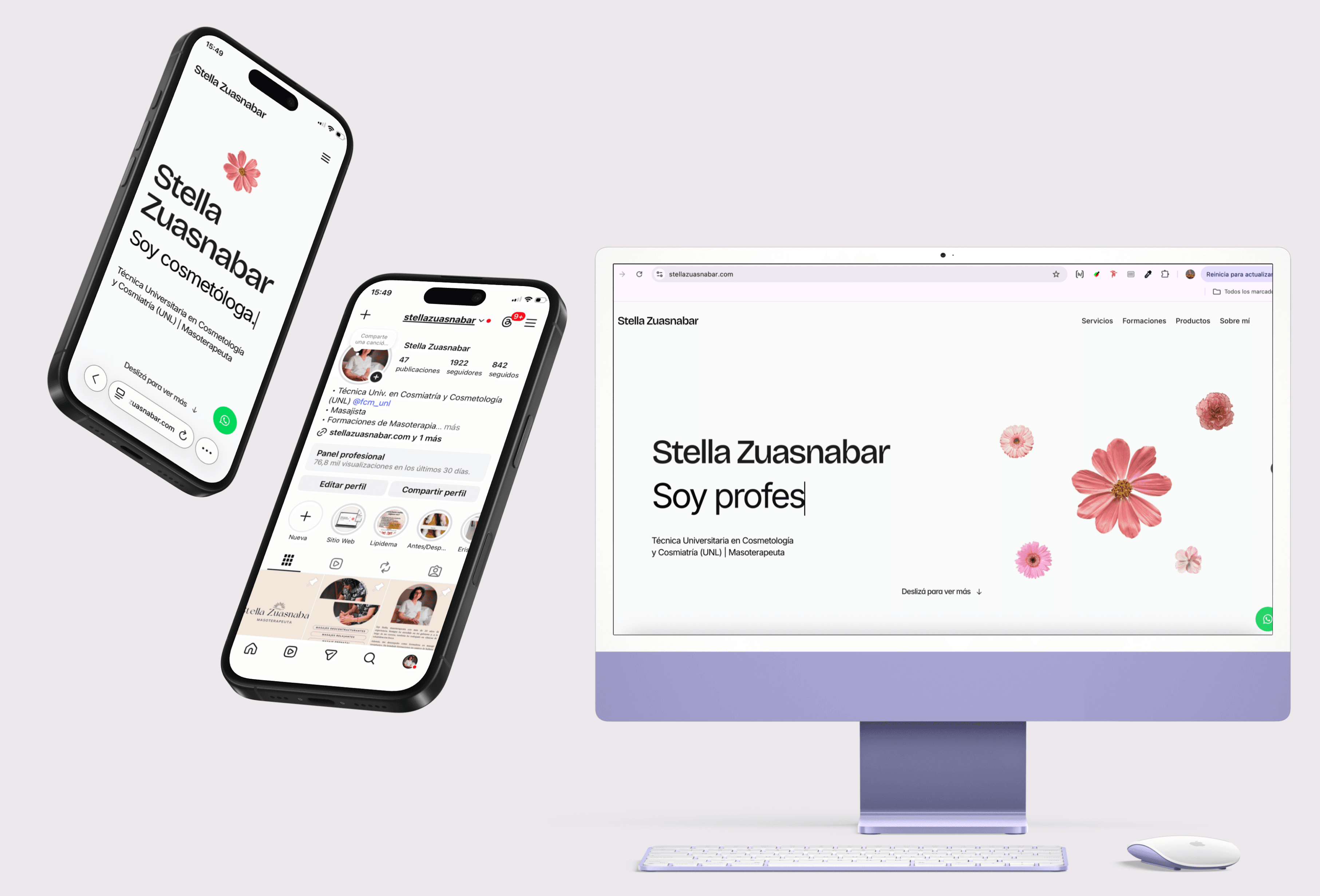
The challenge
Stella is a massage therapist and cosmetologist based in Olavarría, a small city in Argentina, with over 20 years of experience. She had four active lines of business: facial treatments, massage therapy, a municipally accredited training institute, and a skincare product line. All of her communication happened through WhatsApp, word of mouth, and Instagram. The challenge was to bring all of that together into a single, clear website for a local audience where clarity and trust mattered more than aesthetics.
Discovery
The goal of this phase was to understand the problem, the users, and the context before making any design decisions. A mix of qualitative, quantitative, and secondary research methods was used.
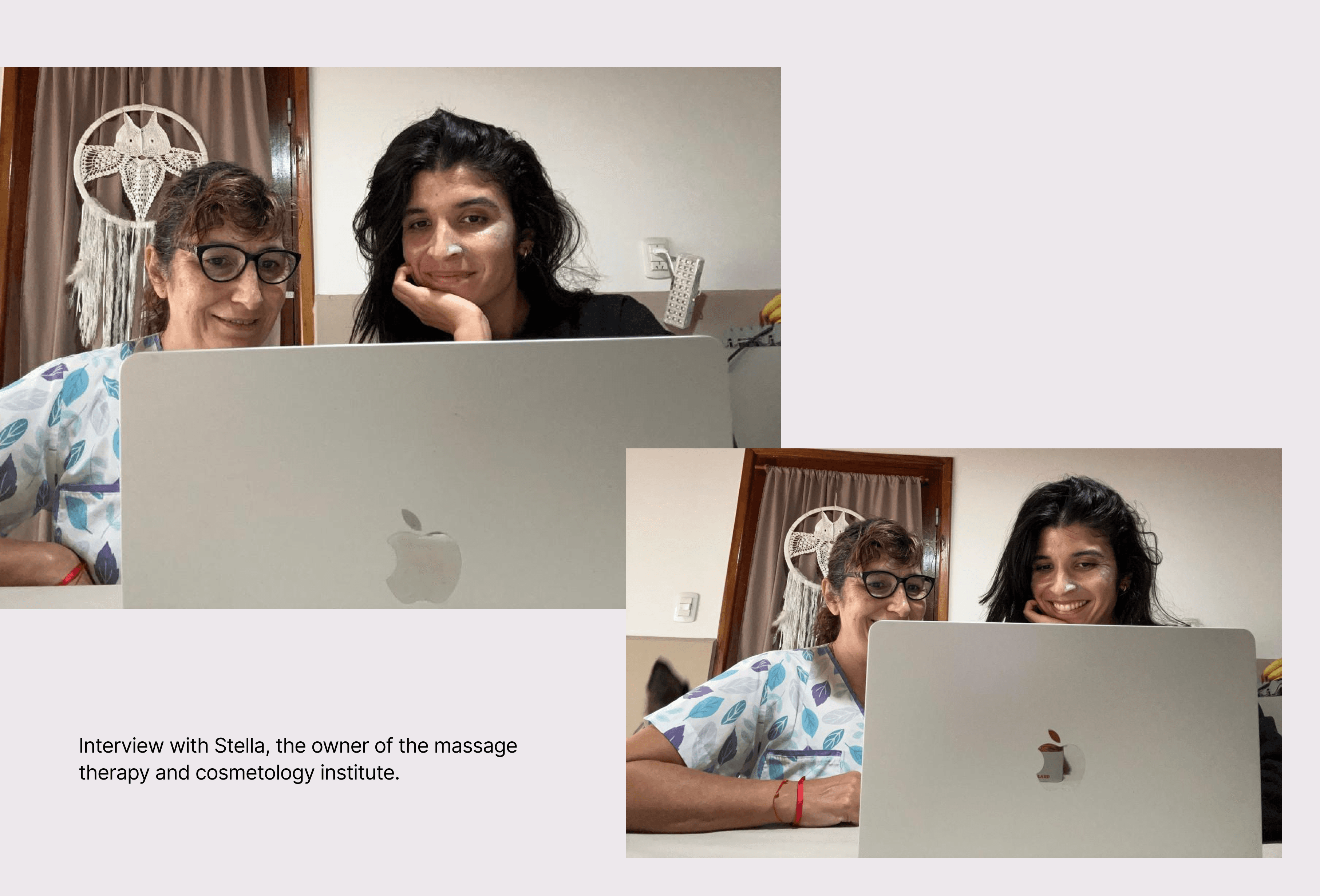
Stakeholder interview
An in-depth interview with the client to map her services, audiences, and main communication channel. This interview was also the primary source for domain research: cosmetology terminology, treatments, and products, all of which were needed to write the technical copy for the site.
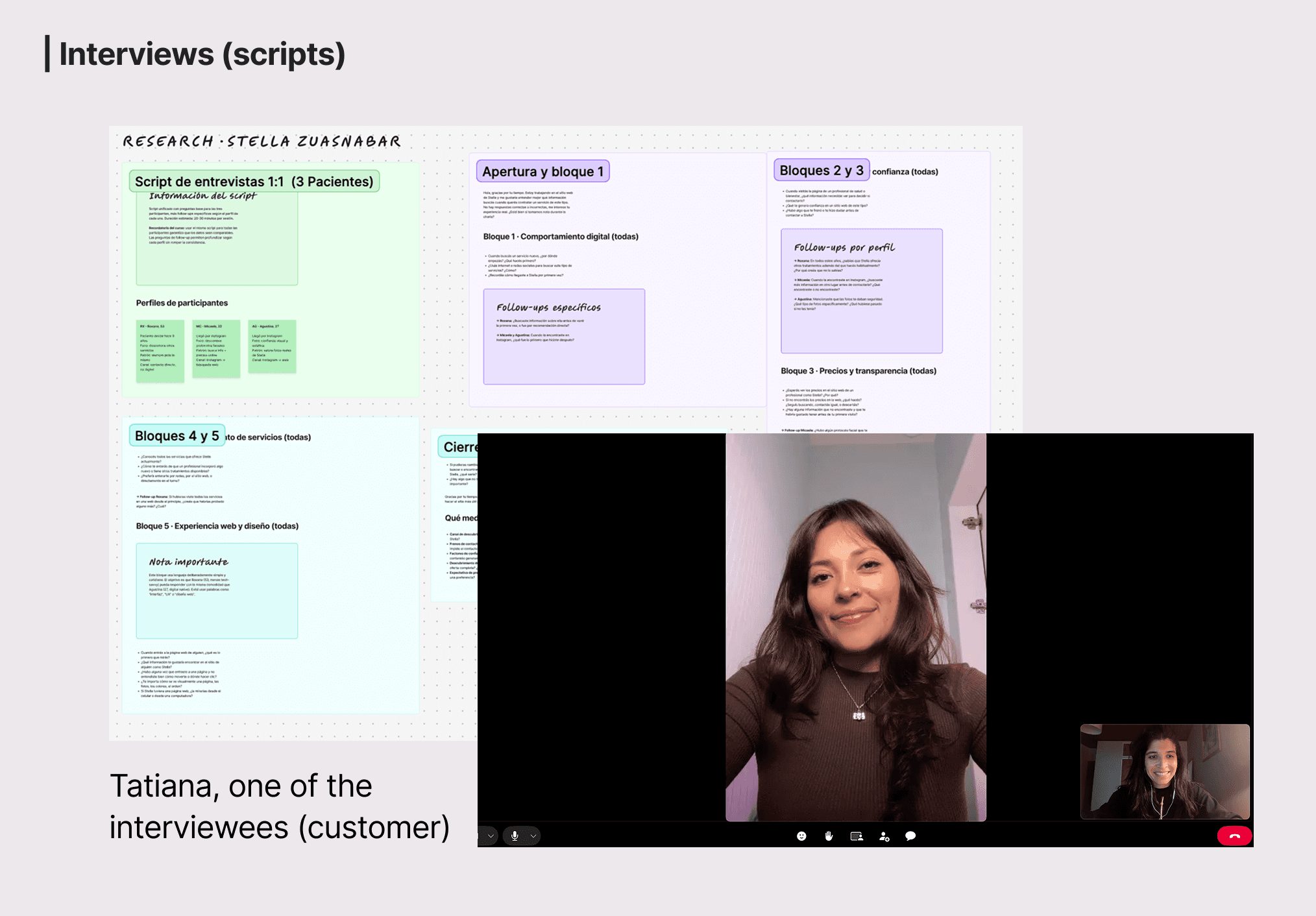
User interviews 1:1 (3 patients)
Interviews with three current patients to understand what information they look for before contacting a professional like Stella, what builds trust, and what stops them from reaching out. Key insight: the absence of prices was the main barrier to making contact.
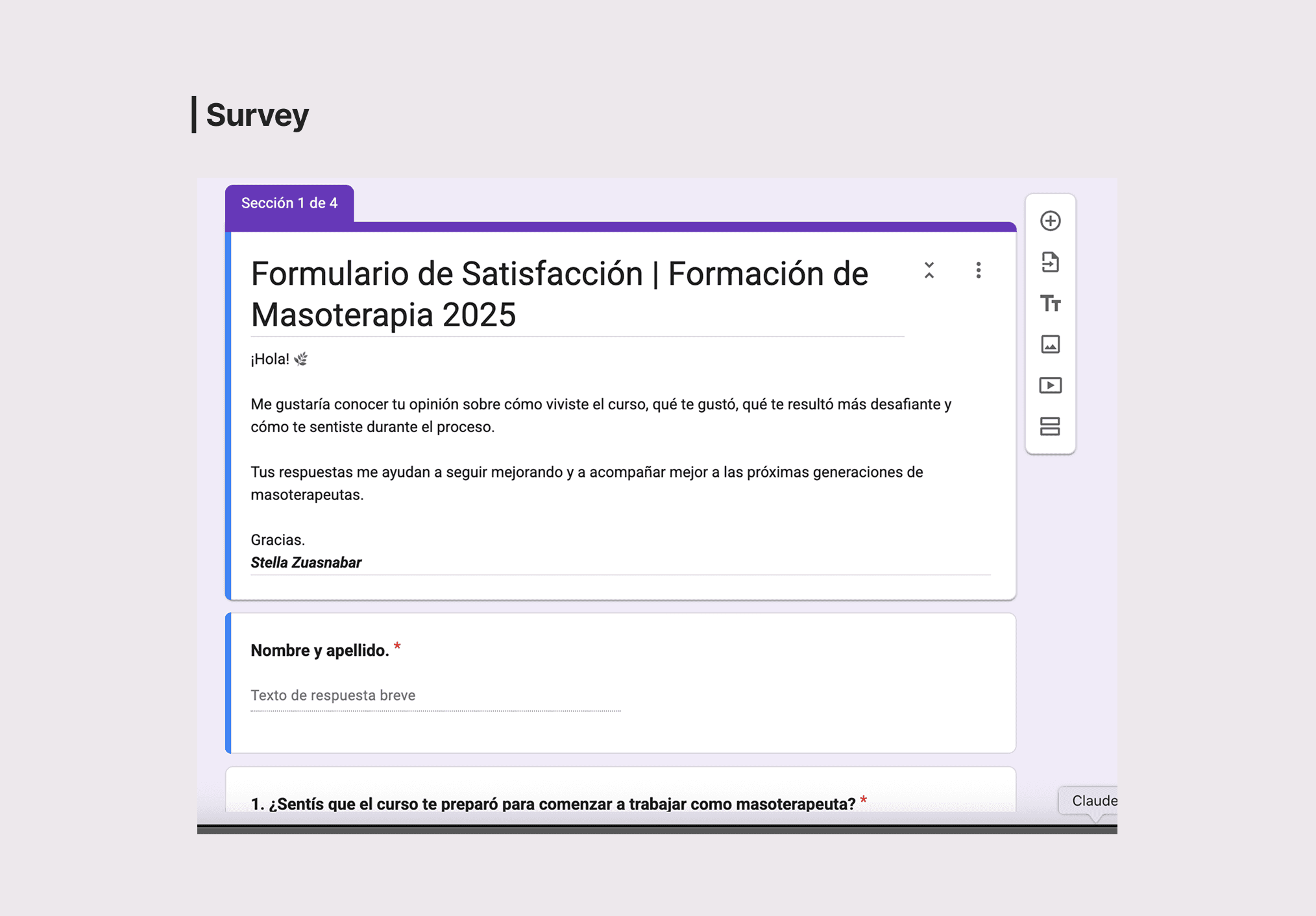
Survey via Google Forms: 6 former students
A quantitative survey to understand what information potential students look for before enrolling: duration, price, accreditation, and career outcomes. The results directly shaped the structure and content of the Training programs section.
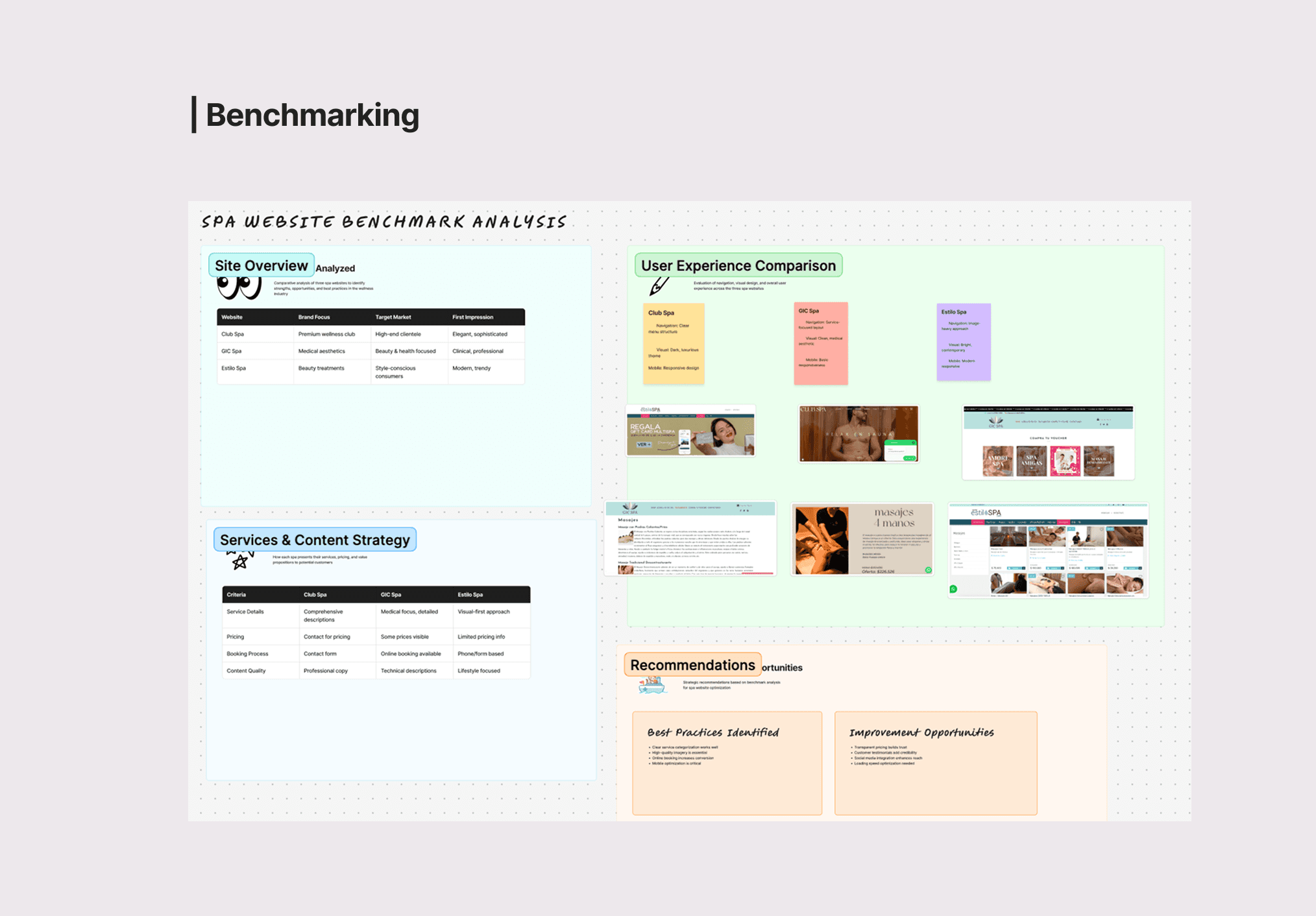
Competitive benchmark
Local (Olavarría): No competitor had a proper website with a custom domain. The standard was Instagram profiles with a Linktree linking to a PDF with prices and services. No descriptions, no structure, no trust signals. This made the opportunity clear: a simple, well-organized site with its own domain would already stand out.
National (rest of Argentina): An analysis of Instagram profiles and websites from larger competitors: Club Spa, GIC Hair & Spa, Estilo Spa, and Head Spa Argentina. Most had websites, but content was often generic and hard to navigate. This helped define a quality benchmark for descriptions, photography, and information hierarchy.
Both levels confirmed the same thing: clarity and organization were a real competitive advantage in this market.
Define
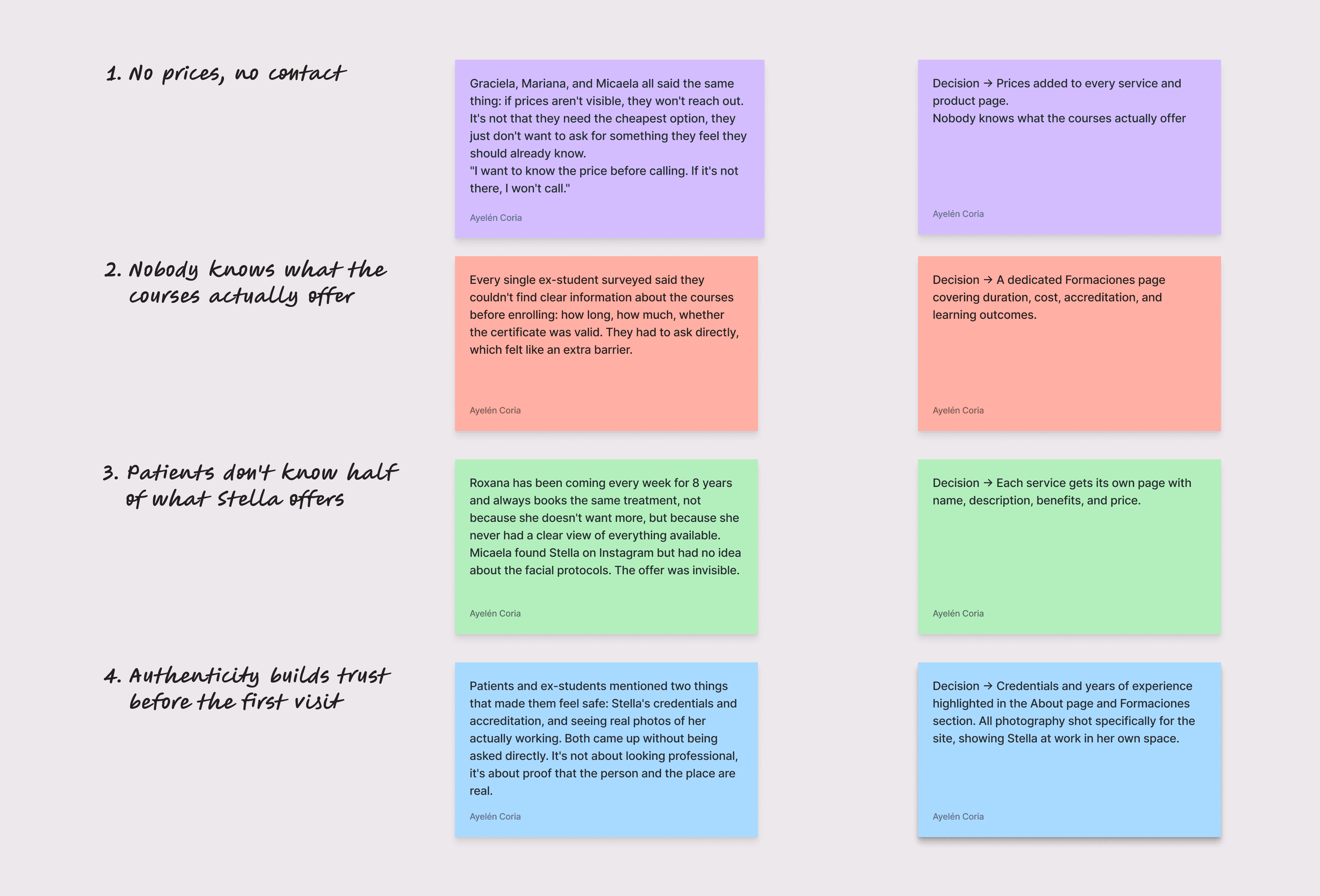
Using everything gathered in the discovery phase, the findings were synthesized into user personas and actionable insights that guided every design decision that followed.
Key insights:
Ideation
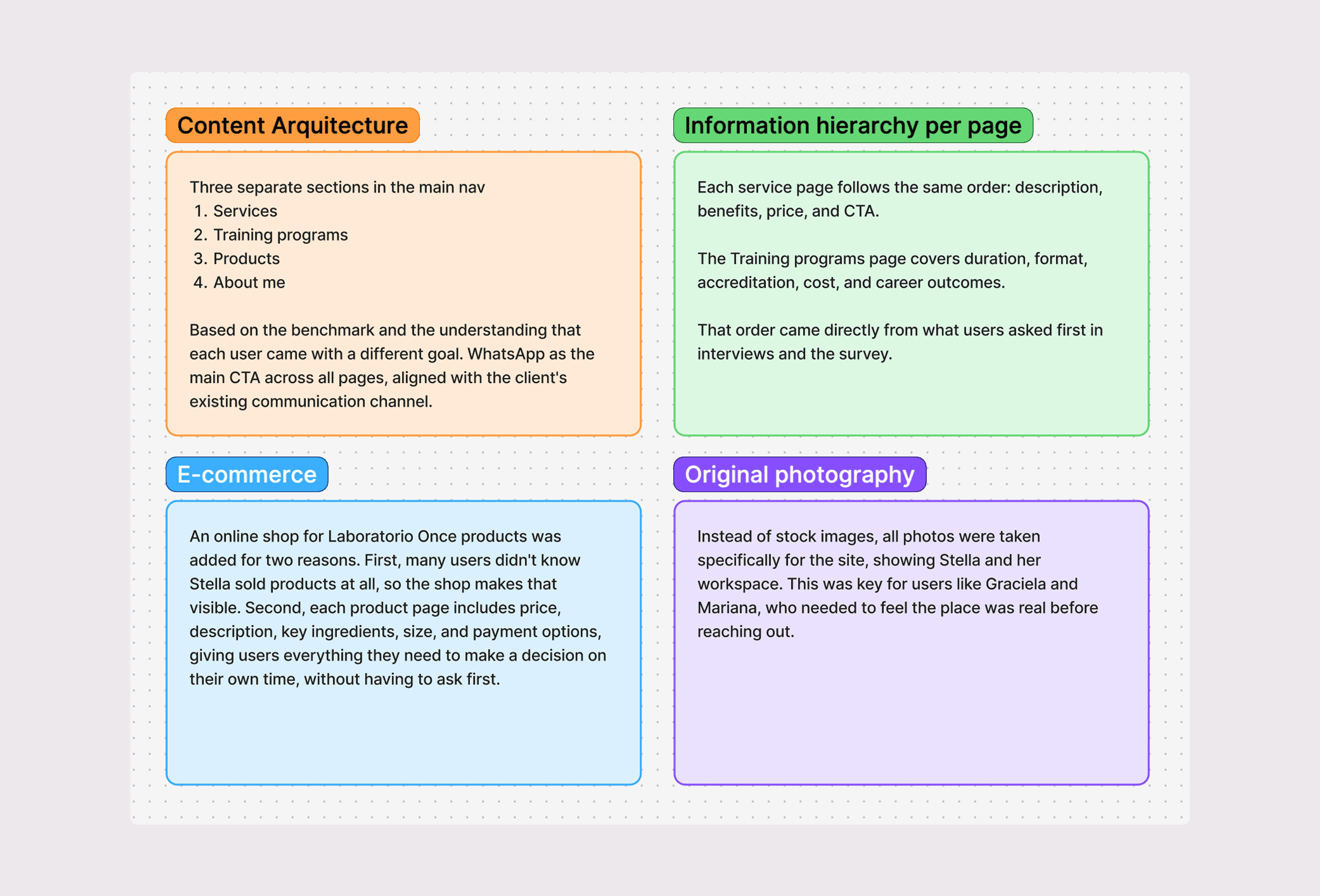
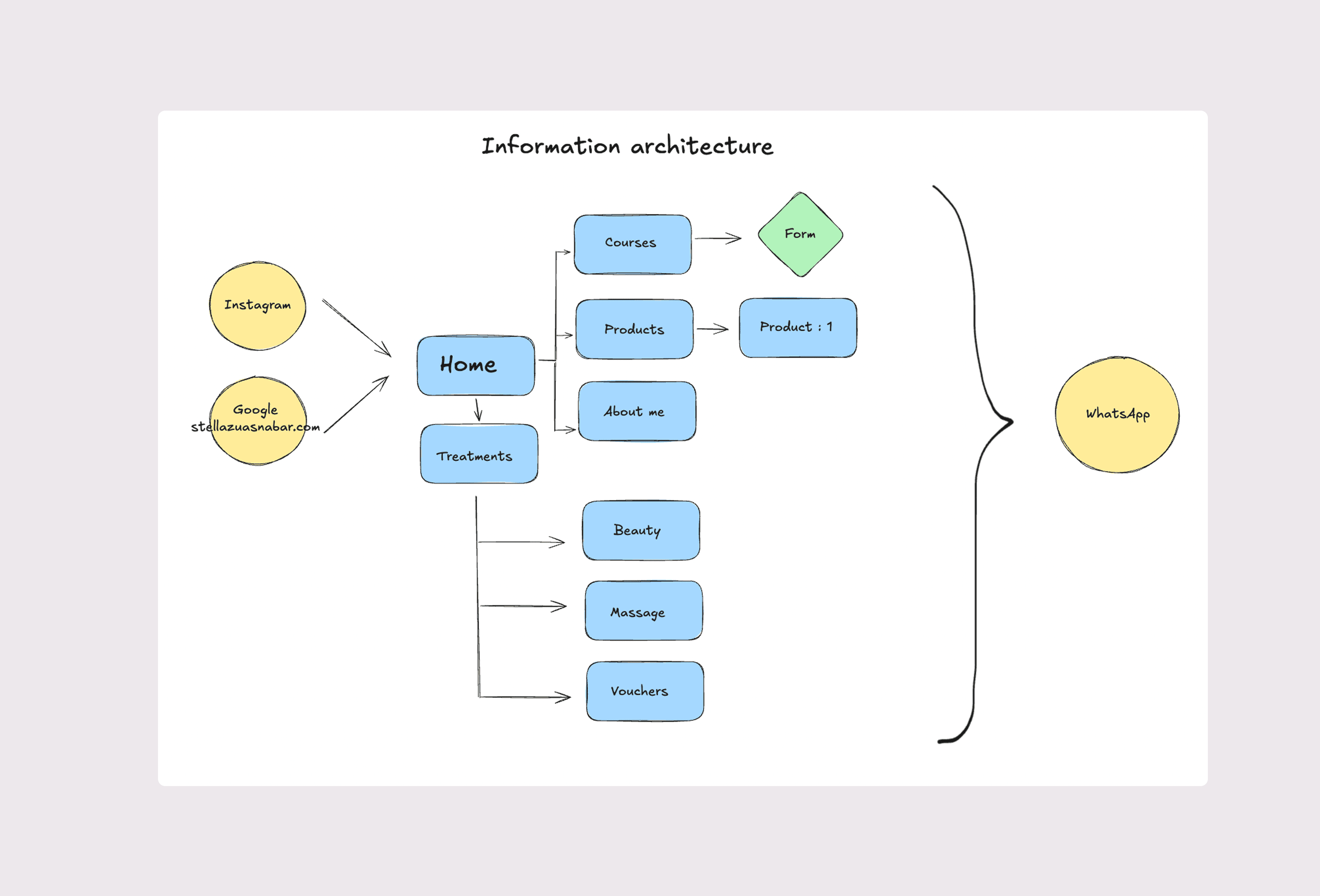
Using the insights as a guide, content architecture and site structure decisions were made before moving into visual design.
Design
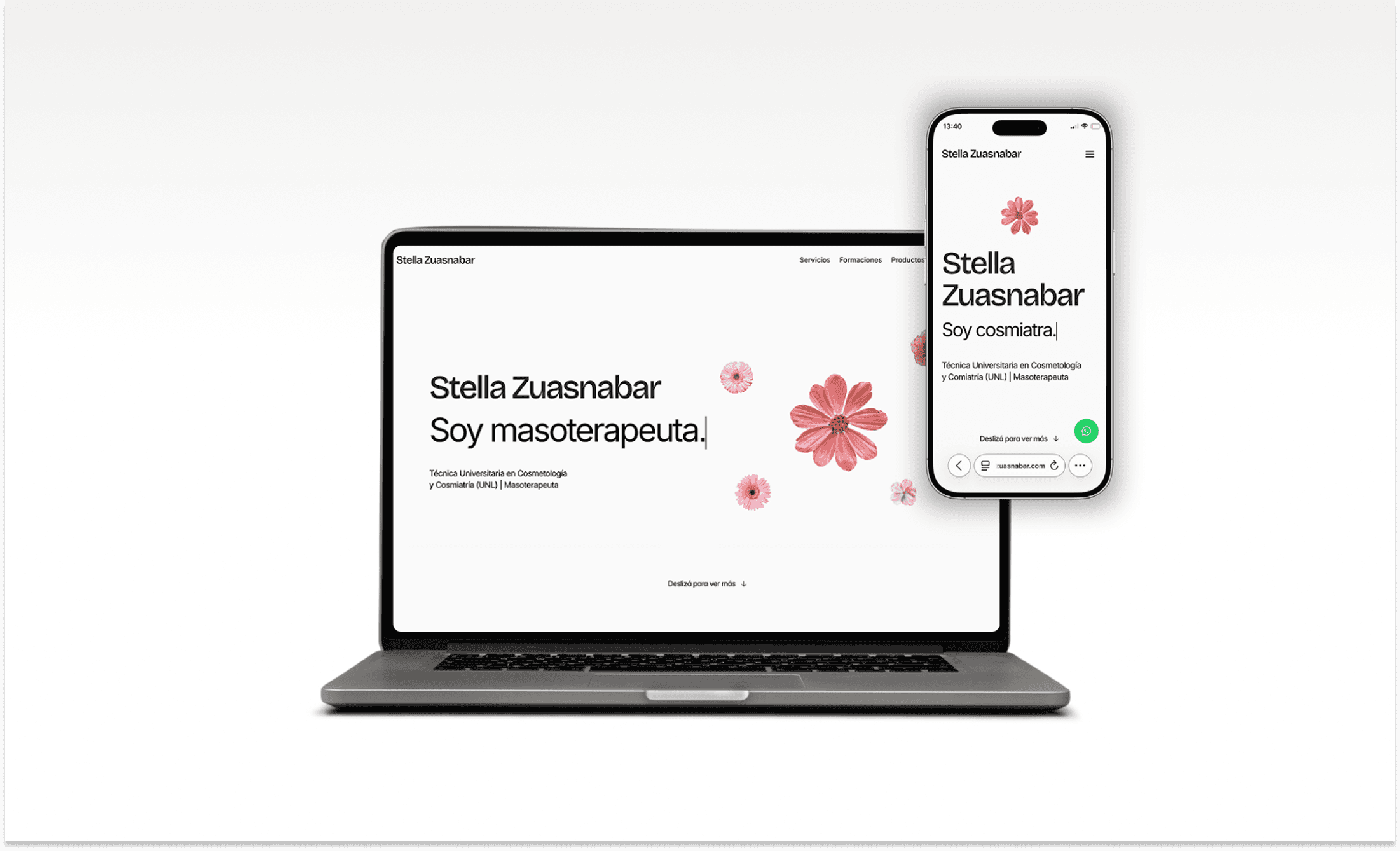
The visual direction was defined together with the client from the start. Stella wanted something clean and simple, close to the aesthetic of medical and health spaces, which naturally led to a black and white palette. White also works well for accessibility: high contrast, easy to read for all age groups.
The typeface chosen was Inter, an open-source font designed specifically for screen readability at any size. It works across devices, requires no licensing, and feels neutral and professional without being cold.
The only decorative element is flowers, which appear on the homepage. Stella has a deep love for plants, and this small detail brings warmth and personality to an otherwise minimal design, without breaking the overall tone.
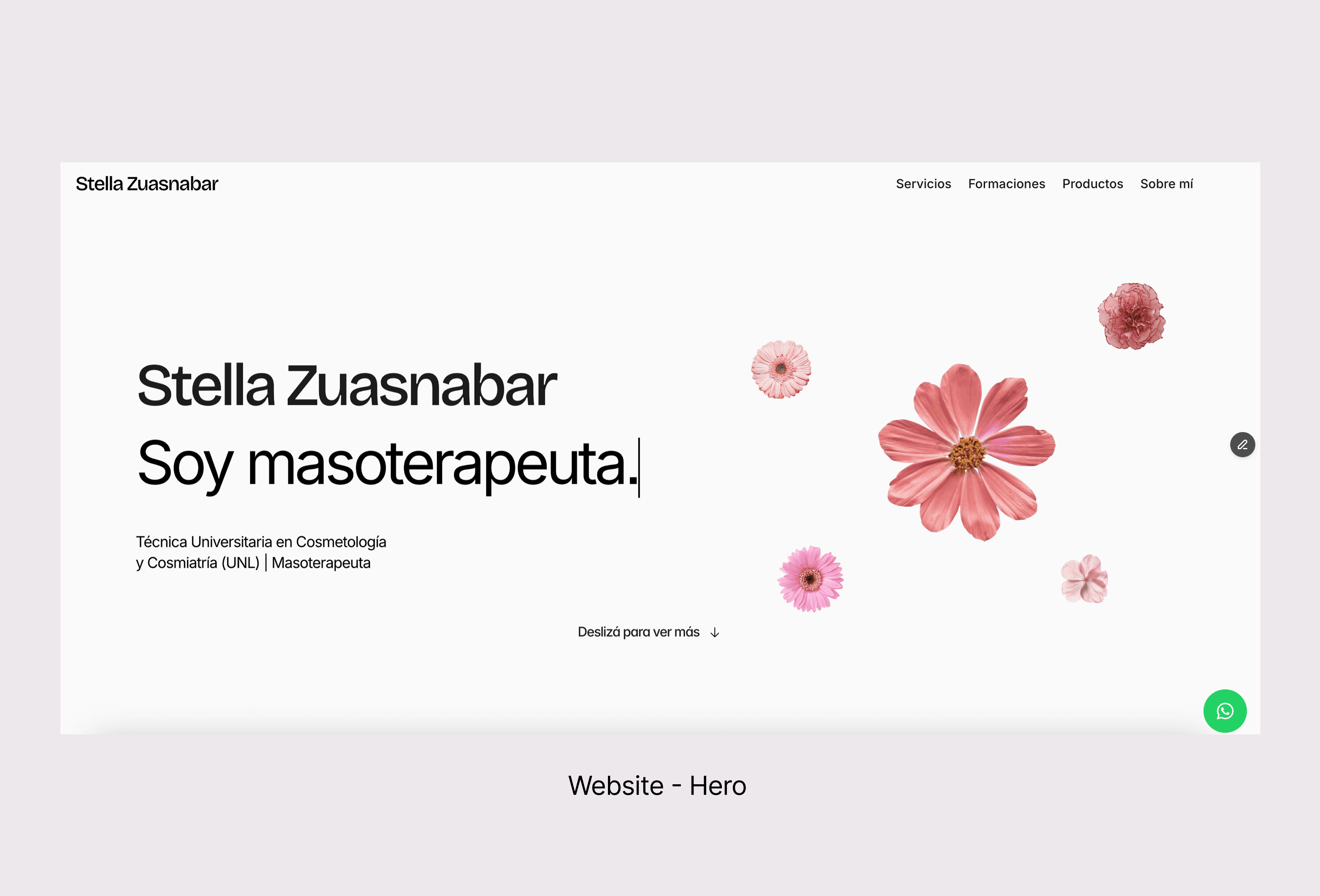
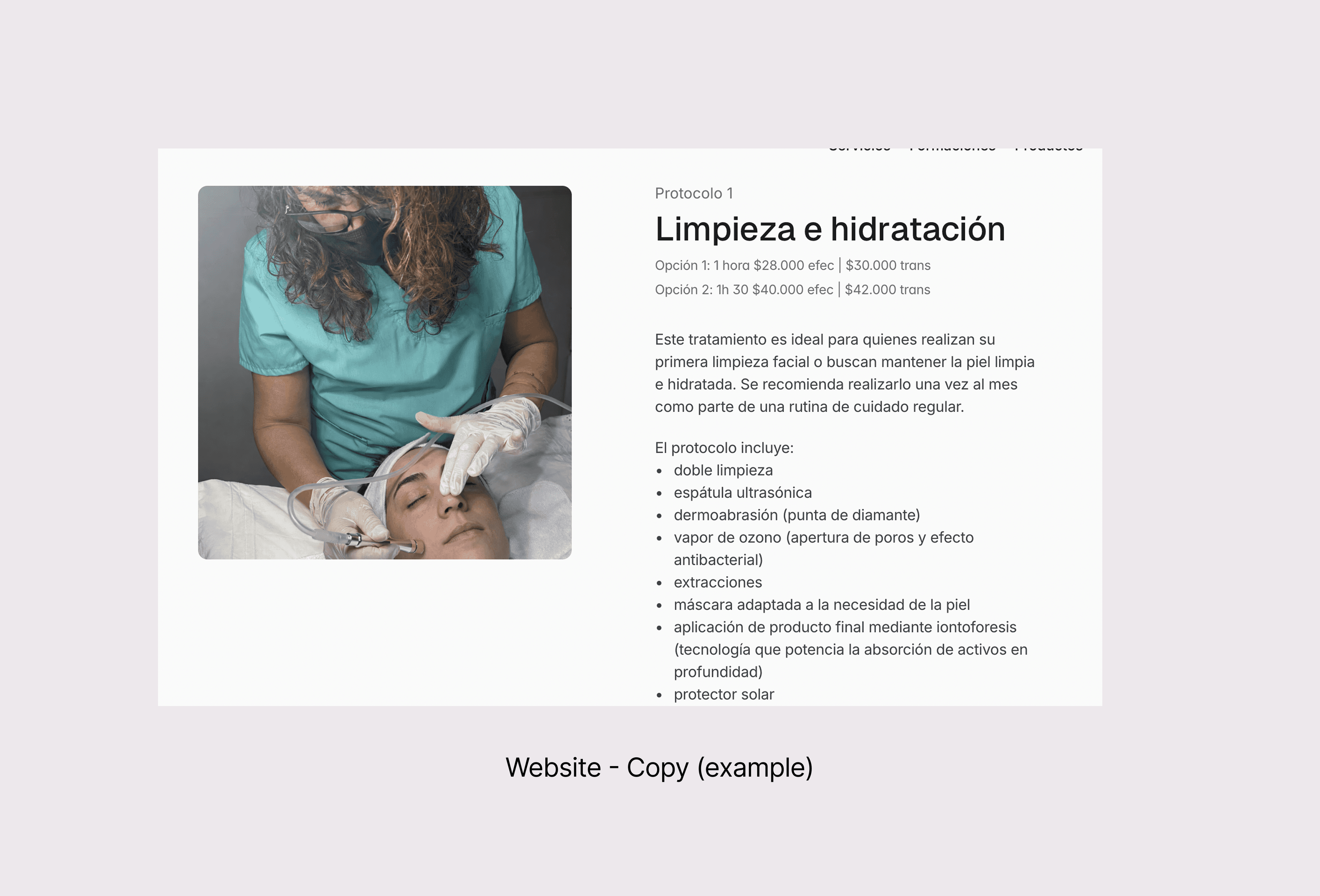
Copy & content strategy& tone: All the written content on the site was researched and written as part of this project. Treatment names, protocol descriptions, product ingredients, benefits, and technical terminology were documented during the stakeholder interview with Stella and then translated into plain, accessible language for each page.
The goal was to give users enough information to make a decision on their own, while keeping the tone simple enough to read comfortably.
Content strategy was driven by what users said they needed in interviews, not by what looked good on the page.
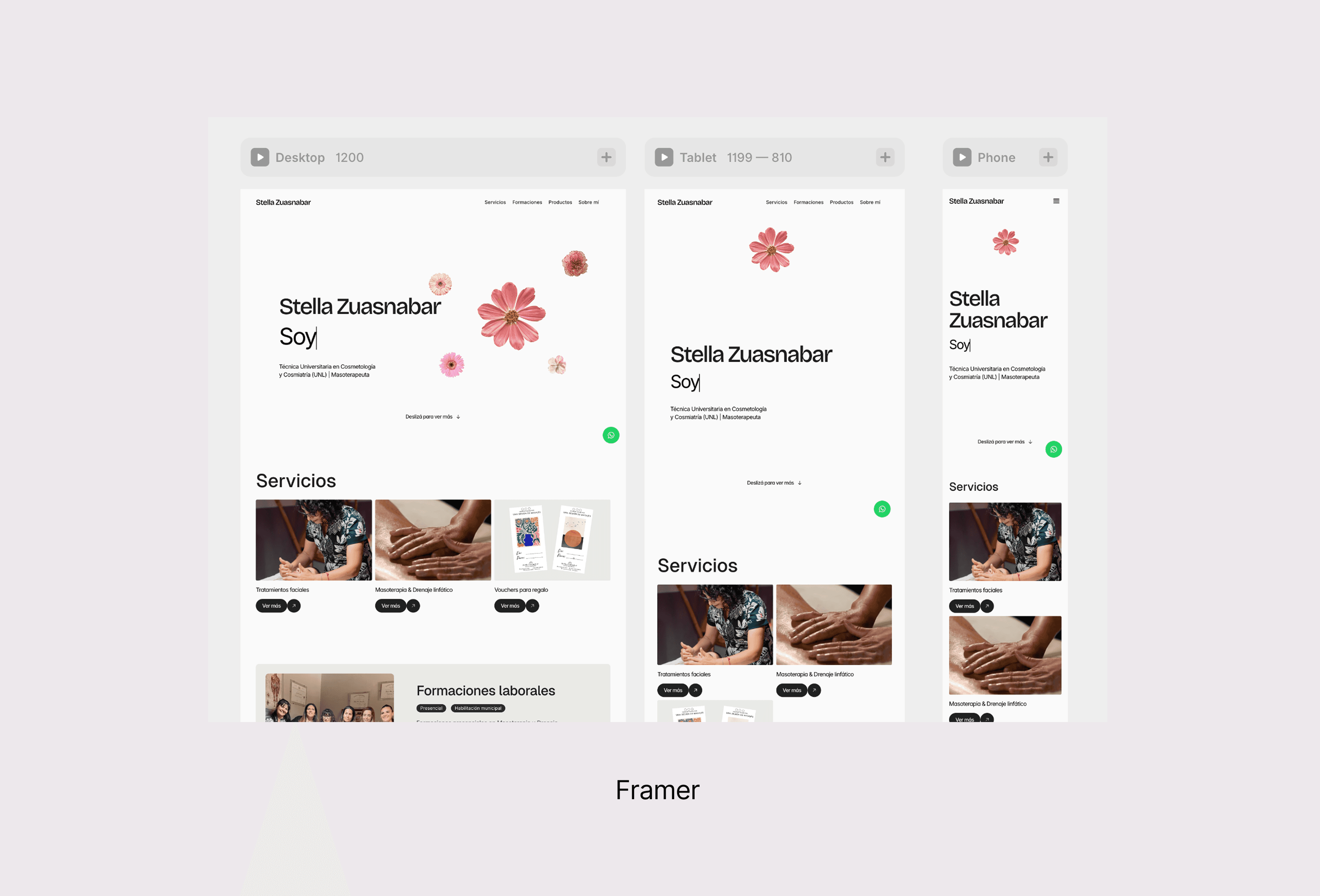
Framer as a strategic decision: The original proposal was to design in Figma and hand it off to a developer. After discussing the budget, we agreed that Framer was a better fit: it allowed the site to be designed and built by the same person, and gives Stella full autonomy to keep it running with a monthly subscription, without depending on a developer for future updates.
Prototype & Test
The site was built directly in Framer as a high-fidelity functional prototype and tested in two ways before launch.
In person Stella reviewed the site in real time and was asked to complete specific tasks: find the price of a service, navigate to the training programs section, and access a specific product in the shop. Her feedback led to adjustments in the technical copy and the order of some content.
Remote Friends representing the defined user personas tested the site virtually. Tasks included: "find information about the massage therapy course", "if you wanted to buy a serum, where would you go?", and "can you find the price of the lymphatic drainage session?" Results validated the navigation structure and revealed small labeling adjustments in a few sections.
Next Steps
The site went live in March 2025 at www.stellazuasnabar.com Since it's a recent launch, metrics are still in early stages. The next steps are:
Monitor real conversion: WhatsApp contacts, training program inquiries, and product orders, to validate the P0 insights in practice.
Track user behavior through Google Search Console and analytics: how many people visit, where they come from, how far they scroll, and where they drop off.
Improve SEO progressively, based on what Search Console shows: which queries bring traffic, which pages rank, and where there are gaps.
Run a second round of research with real site users once enough sessions have accumulated, to validate or iterate on decisions that were made based on pre-launch research.