Overview
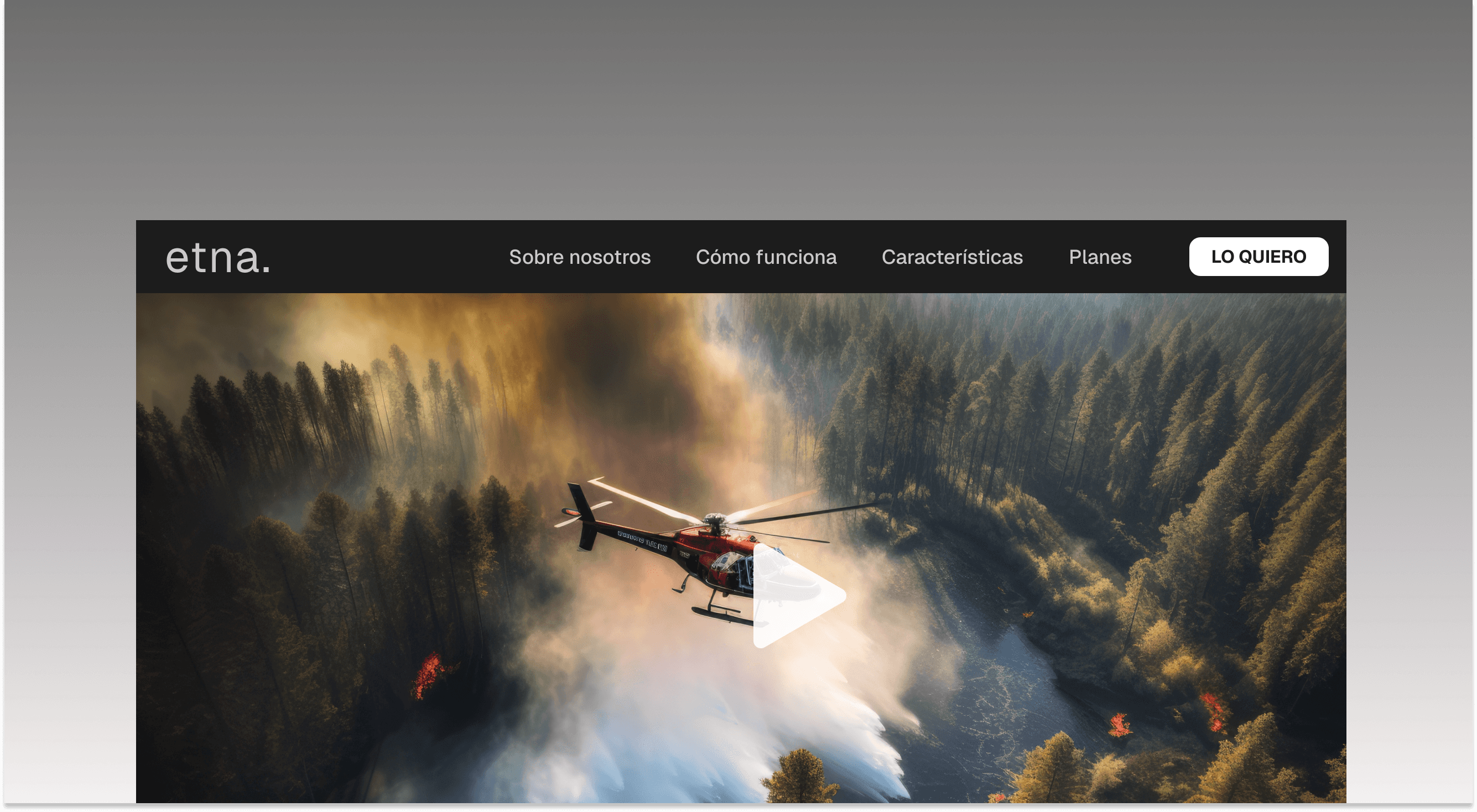
Etna is a two week UX UI academic project where I designed an AI powered smart glasses concept to anticipate wildfires, support field teams and contribute to land regeneration. I defined the product vision, shaped its business model and built a high fidelity MVP landing page in WordPress to test interest and comprehension with real users.
I followed a Lean UX approach to move quickly, reduce uncertainty and validate our assumptions through measurable signals rather than assumptions or polished deliverables.
Context & Challenge
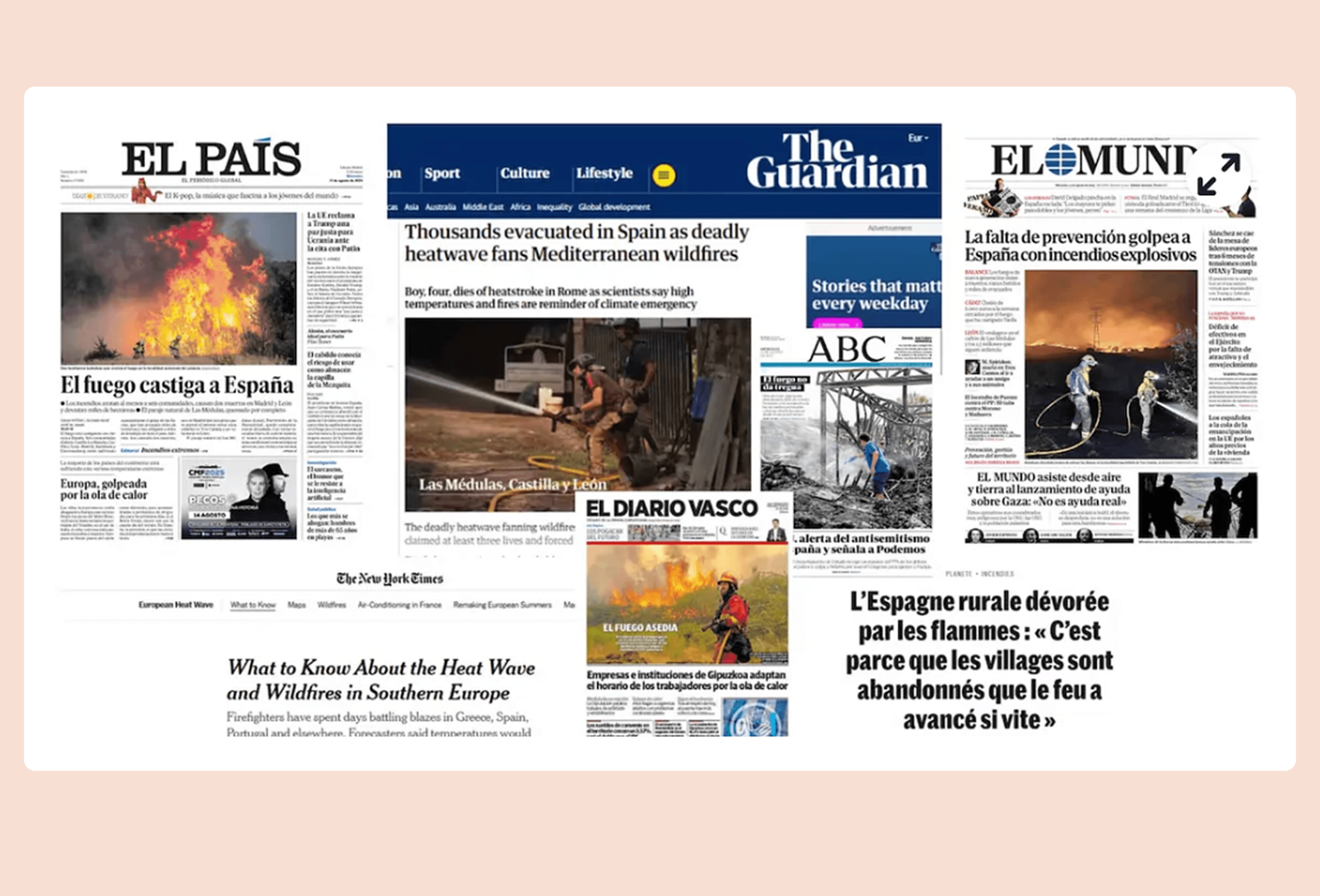
In 2025, Europe faced one of its most severe wildfire seasons. Fires were no longer isolated events, but the result of climate pressure, exhausted ecosystems and slow, fragmented response systems.
Within this scenario, I designed a solution capable of anticipating wildfire risk, supporting field teams in action and contributing to land regeneration.
Approach
To move efficiently within a two week timeline, I applied a Lean UX approach focused on reducing uncertainty and learning fast. I began by framing the problem through assumptions, hypotheses, proto personas and journeys, then explored the concept at a systems level to define the essential user flows and value proposition.
Instead of designing a full product, I built only what I needed to learn: a concept model, core functionalities and a high fidelity prototype in Figma. Finally, I launched the landing page using WordPress and measured engagement to understand what resonated, where friction appeared and what needed refinement for the next iteration.
Research & Problem Framing
To understand the problem before proposing a solution, I conducted:
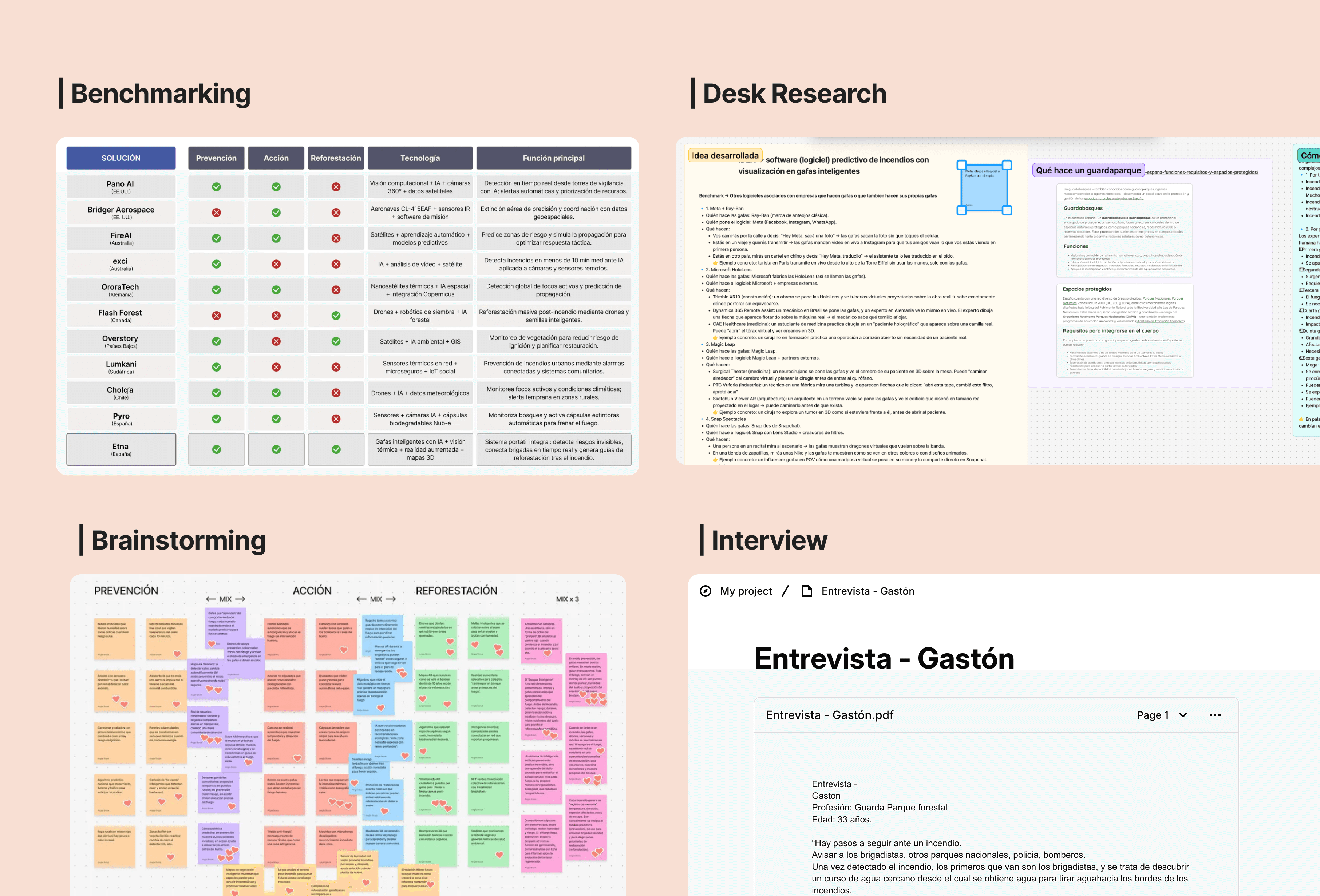
Desk Research & Benchmark
I analyzed wildfire behavior, climate data and institutional reports to understand where current prevention systems fall short. In parallel, I benchmarked global startups and emerging technologies tackling wildfire prediction, monitoring or response.
Across all cases, one insight stood out: solutions tend to address only a single phase, but almost none connect prevention, action and regeneration into a unified, end to end ecosystem, revealing a clear opportunity for Etna.
Interviews
Interviews with national park rangers revealed high pressure decision making with limited predictive information, fragmented communication tools and slow access to critical data. These insights shaped the functional direction of Etna.
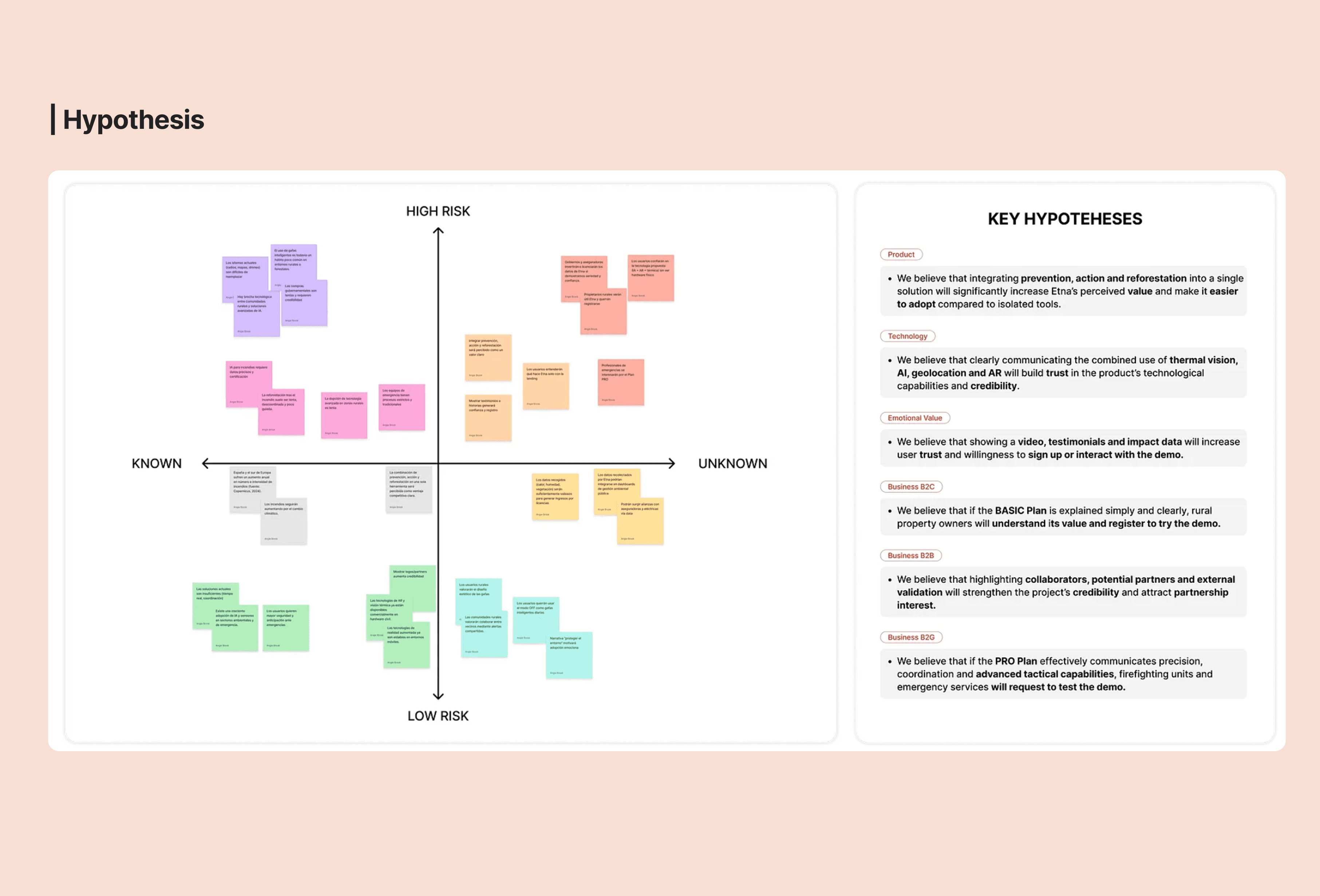
Assumptions & Hypotheses
I mapped our riskiest assumptions and turned them into a testable hypothesis:
"If we provide field teams and rural communities with predictive smart glasses, we can reduce response time and increase safety in early wildfire stages". This hypothesis became the anchor for the MVP.
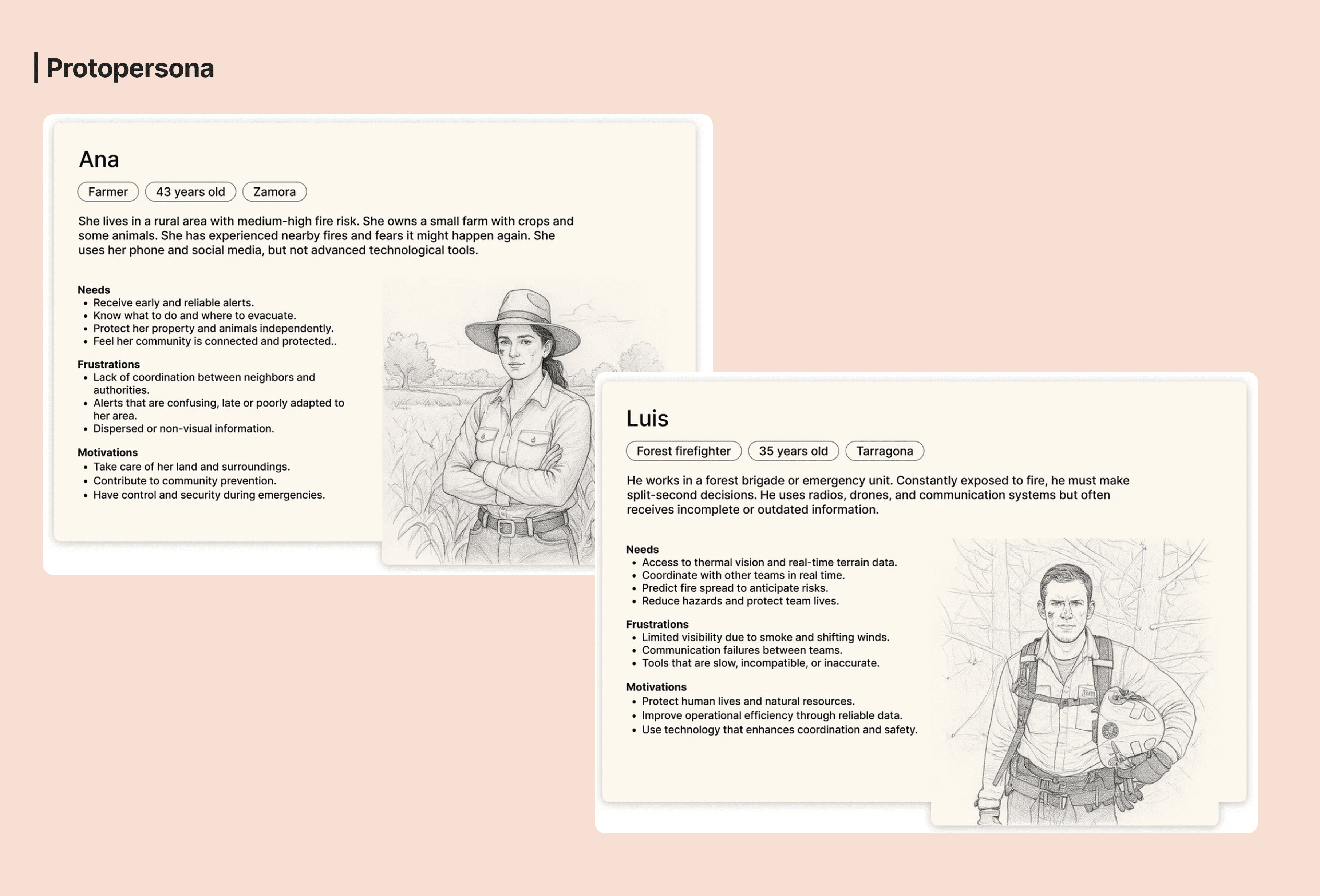
Proto Personas
Two primary user groups emerged:
Rural residents, who need simple, accessible alerts and evacuation guidance.
Forest brigades, who require real time tactical information and coordinated action.
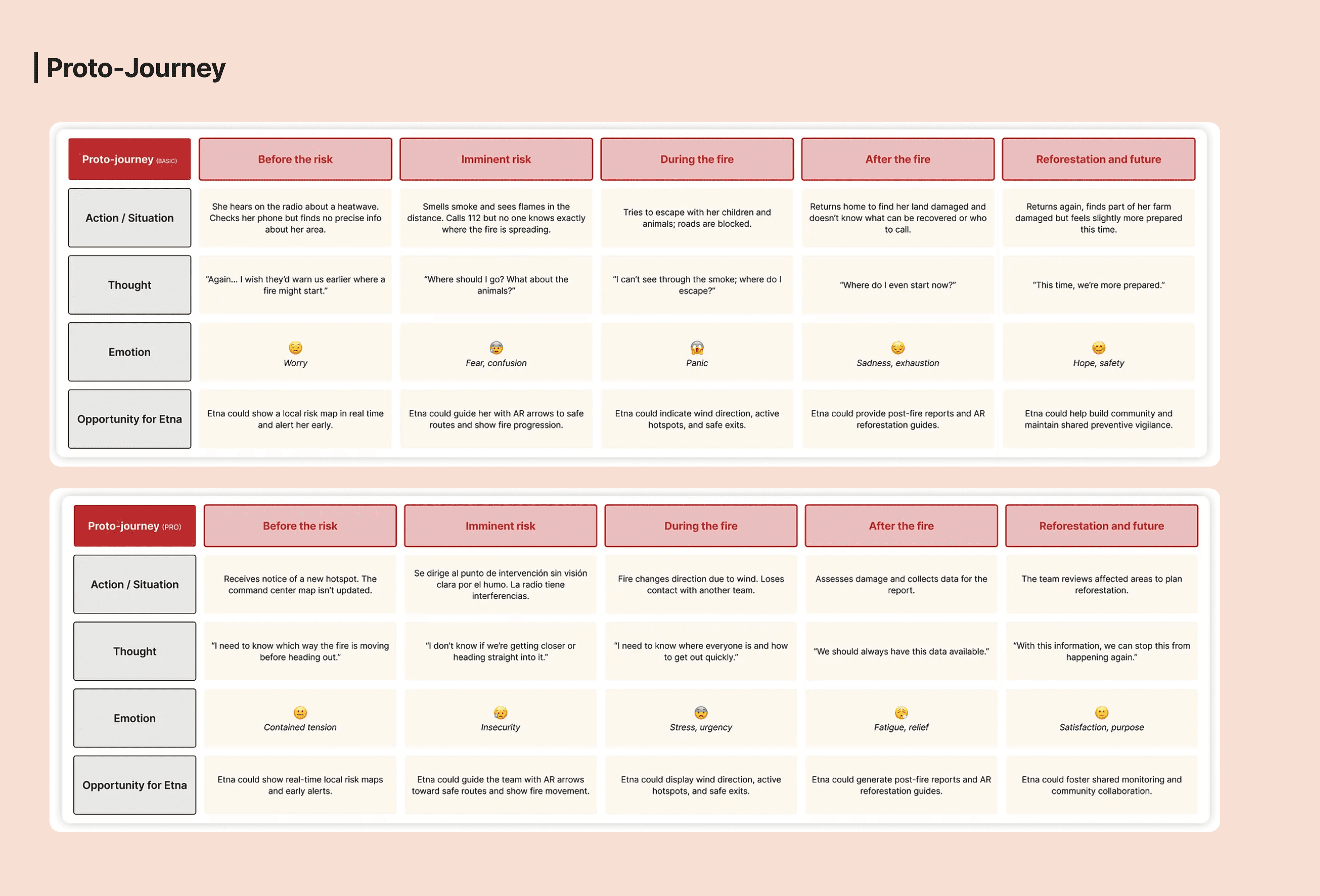
Proto Journeys
I mapped their journeys before, during and after a wildfire to identify critical moments.
Solution
1. Predictive Smart Glasses
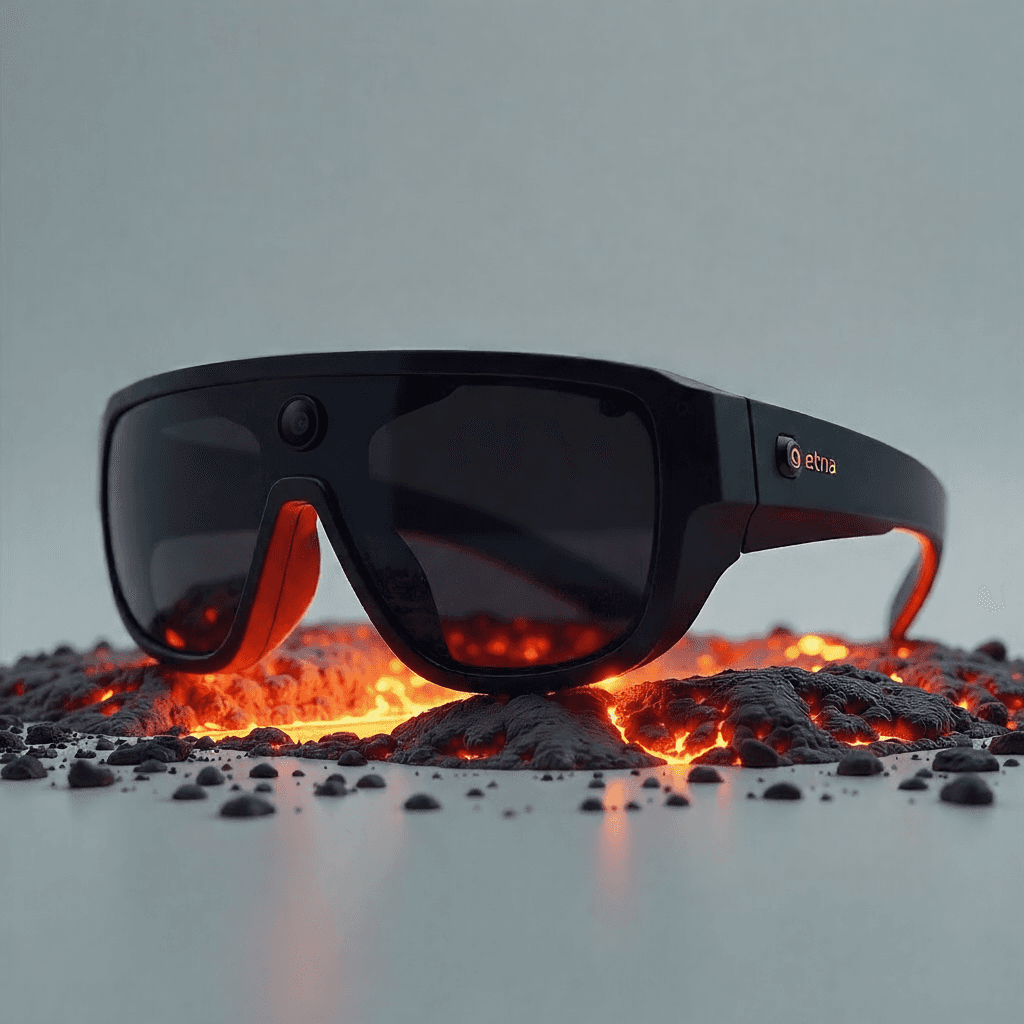
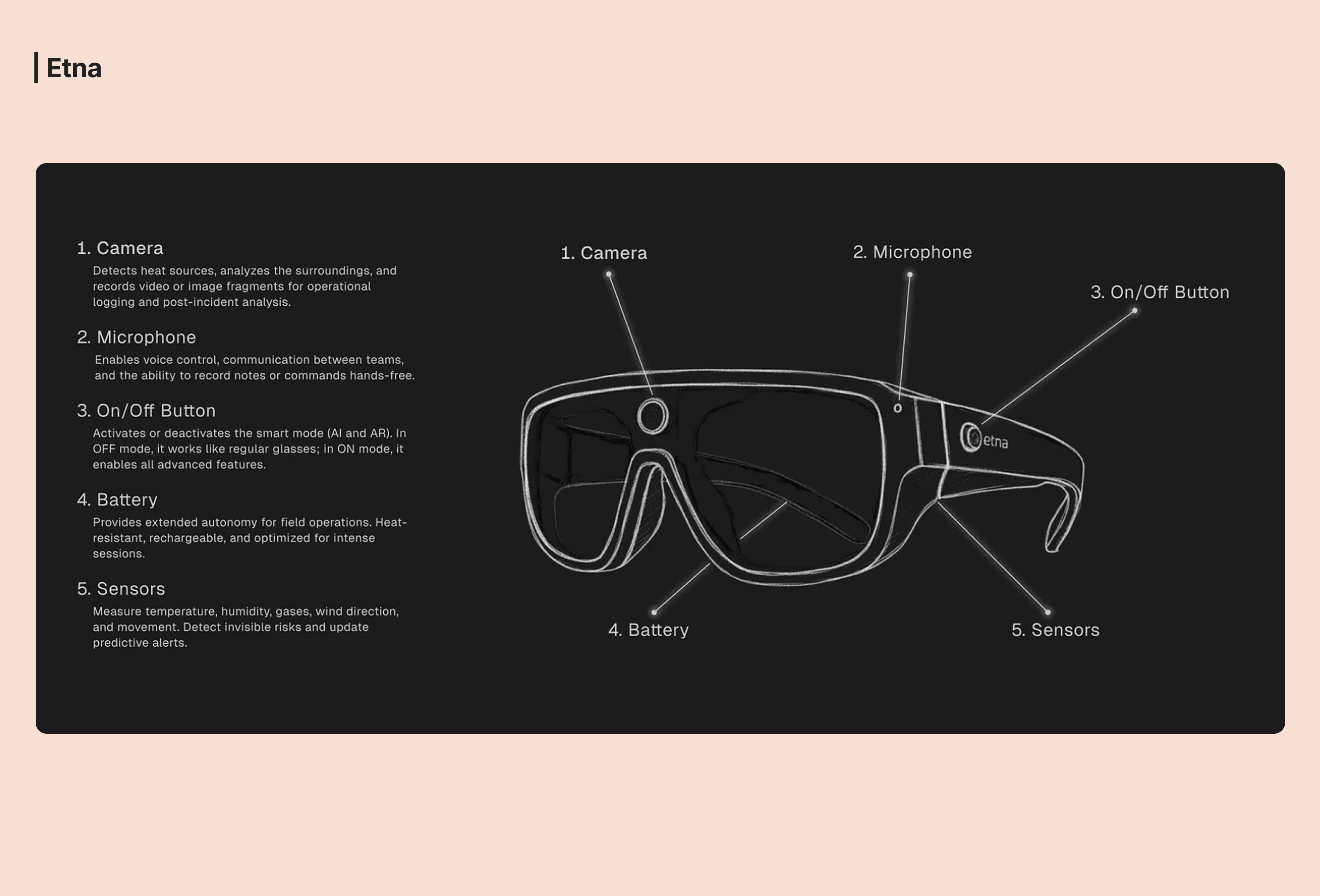
Etna consists of lightweight smart glasses equipped with sensors (temperature, humidity, wind, gases), a real time camera for hotspot detection, voice interaction for hands free tasks and AR overlays that display risk zones, safe routes and nearby resources.
2. Software Ecosystem: Prevention, Action, Regeneration
The system operates across three connected phases:
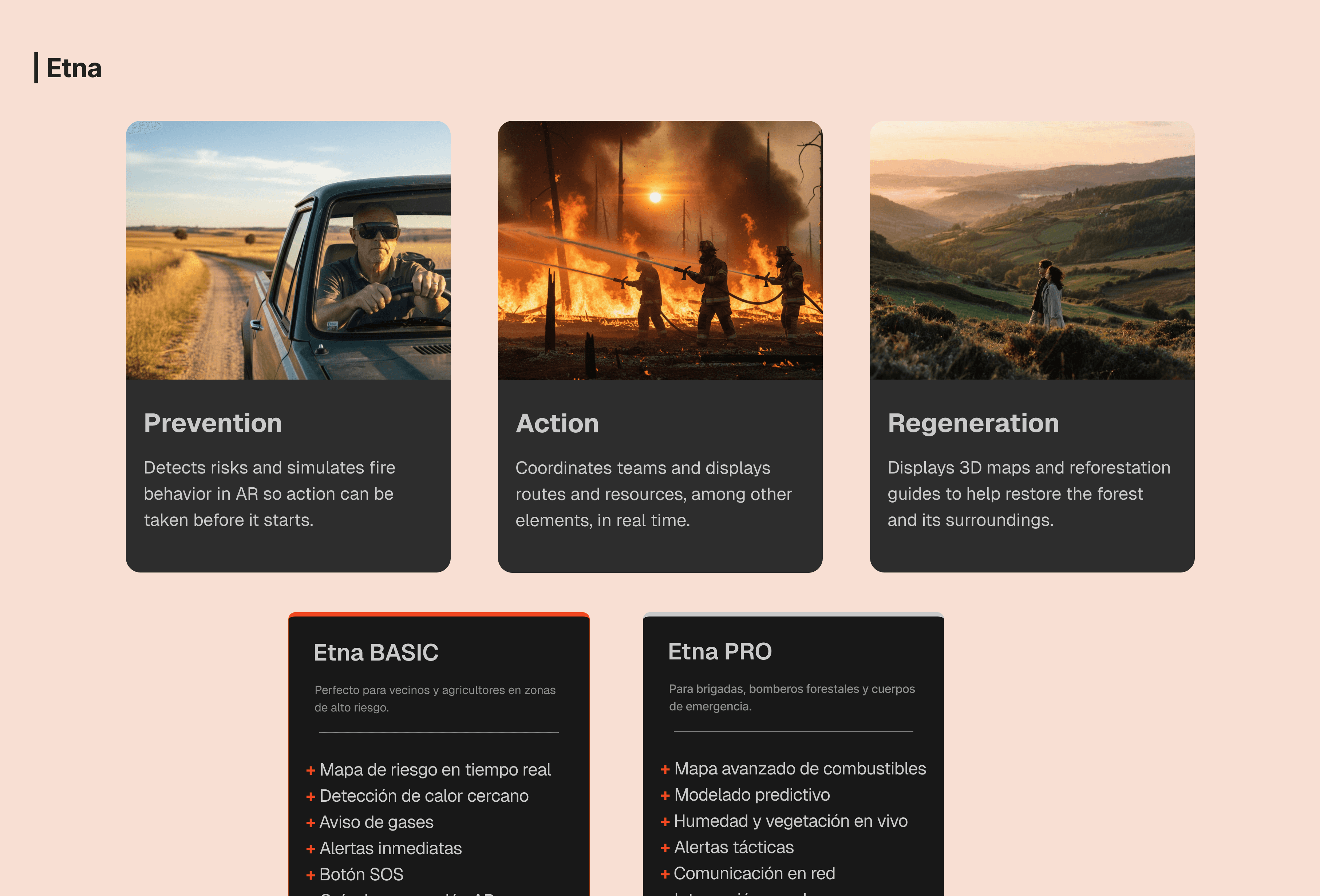
Prevention : predictive modeling and early alerts before ignition
Action: AR supported coordination with safe route guidance and shared situational awareness
Regeneration: 3D terrain mapping and reforestation recommendations after the event
3. Two User Plans
Designed around our proto personas:
Etna Basic: simple risk alerts, detection, evacuation guidance and SOS support for rural residents
Etna Pro: predictive modeling, mesh communication, thermal vision and tactical tools for brigades and emergency teams
Each plan aligns value with the real needs of its user group.
4. Business Model
A sustainable, three pillar monetization model:
B2G: Etna PRO glasses and predictive software for national parks and public agencies
B2B: risk intelligence, datasets and predictive mapping for insurers, utilities and forestry companies
B2C: an accessible BASIC plan for communities in high risk areas
Building MVP
With my assumptions, hypothesis and core users defined, the next step was to turn the concept into something tangible.
Landing Page
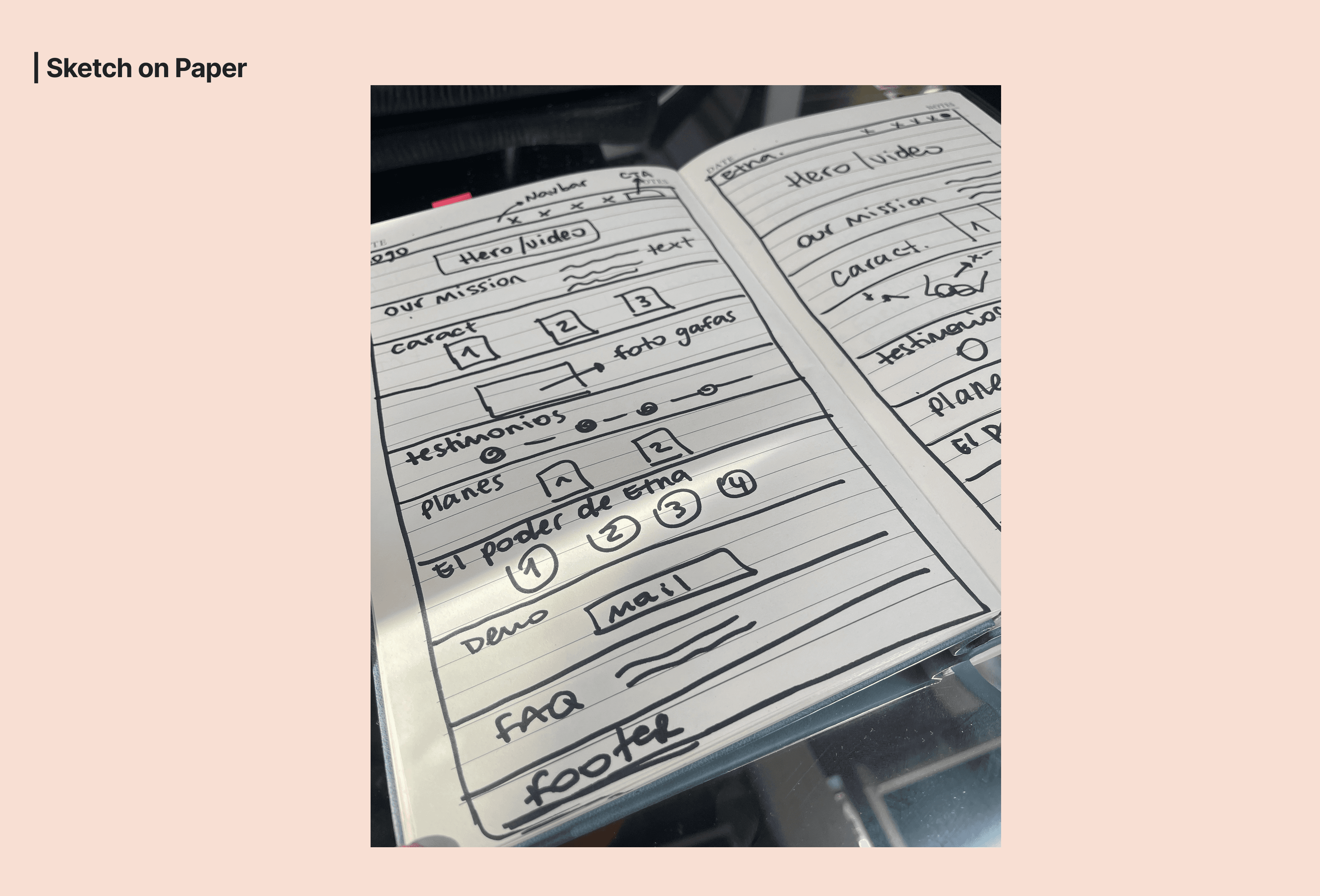
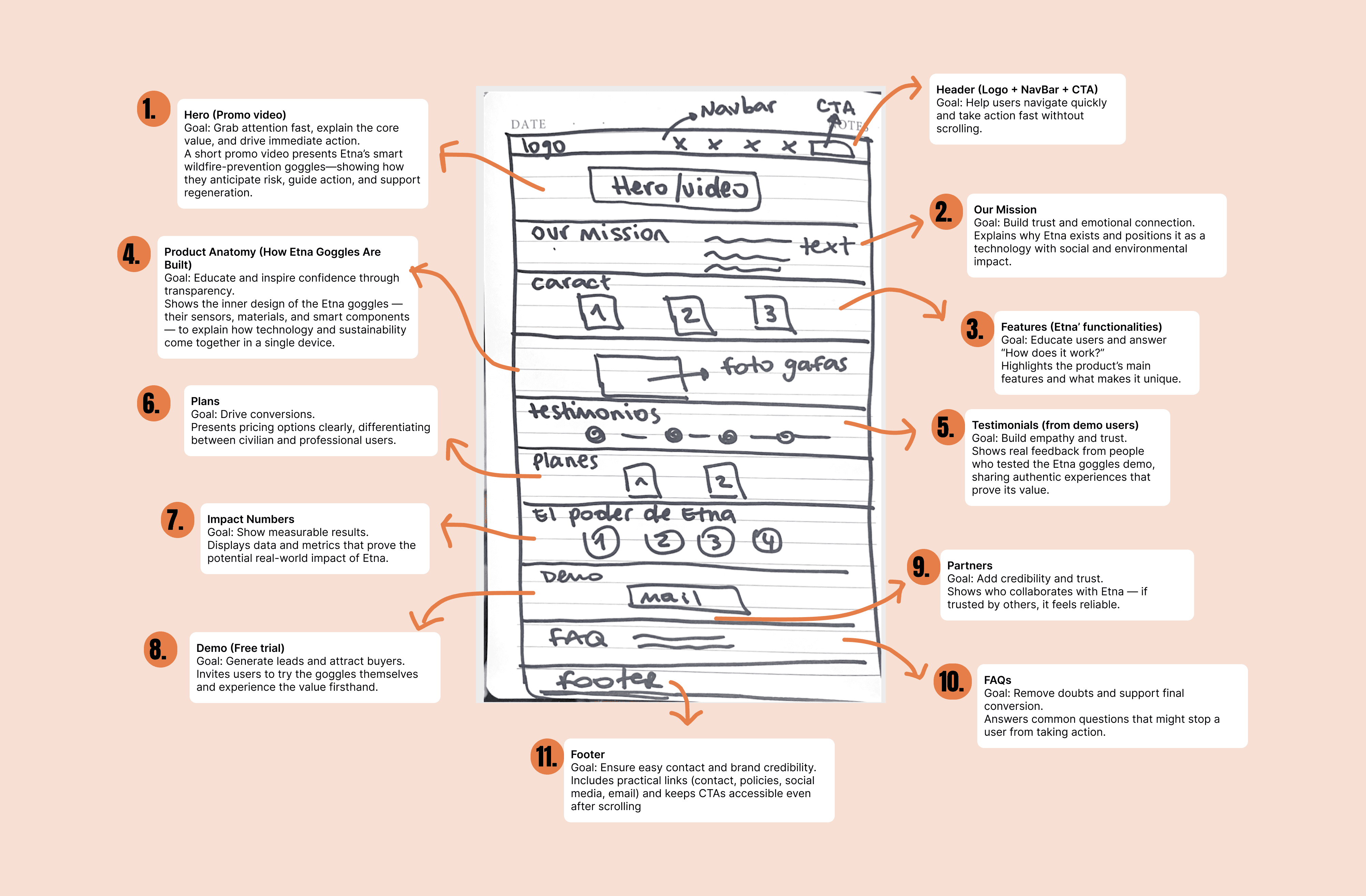
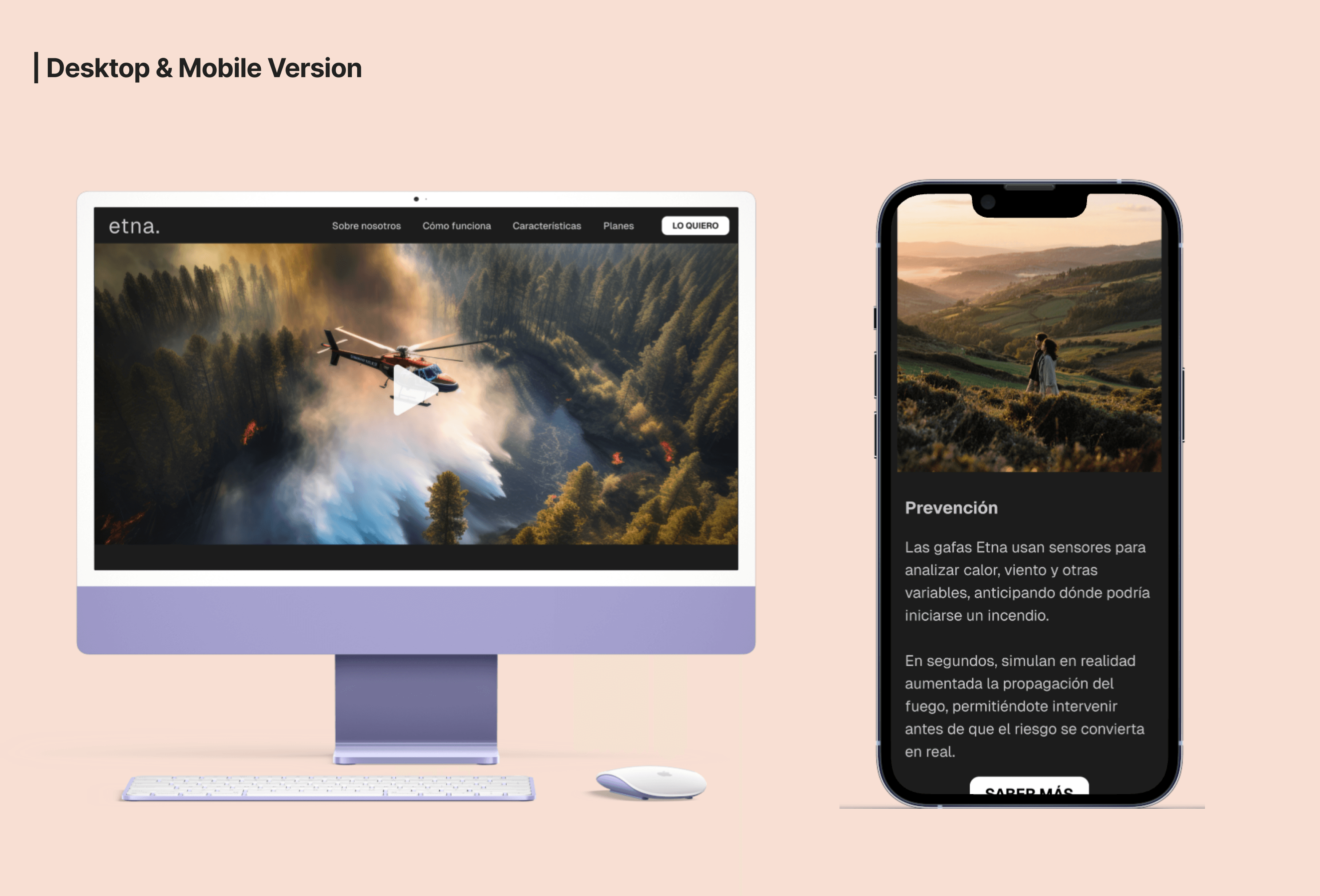
I first sketched low fidelity wireframes by hand to define the landing page structure. Then, I moved to Figma to design the high fidelity version.
The landing was built in WordPress, prioritizing clarity, cross-platform design and accessibility considerations like contrast, legible typography and clear focus states. To bring the concept to life visually, I used Freepik resources to create realistic renders and videos that helped users understand how Etna would work.
Go-to-market
With the landing ready, I launched the MVP publicly. The goal was simple: measure interest, gather real user insights and validate early hypotheses before moving into more complex development.
Impact
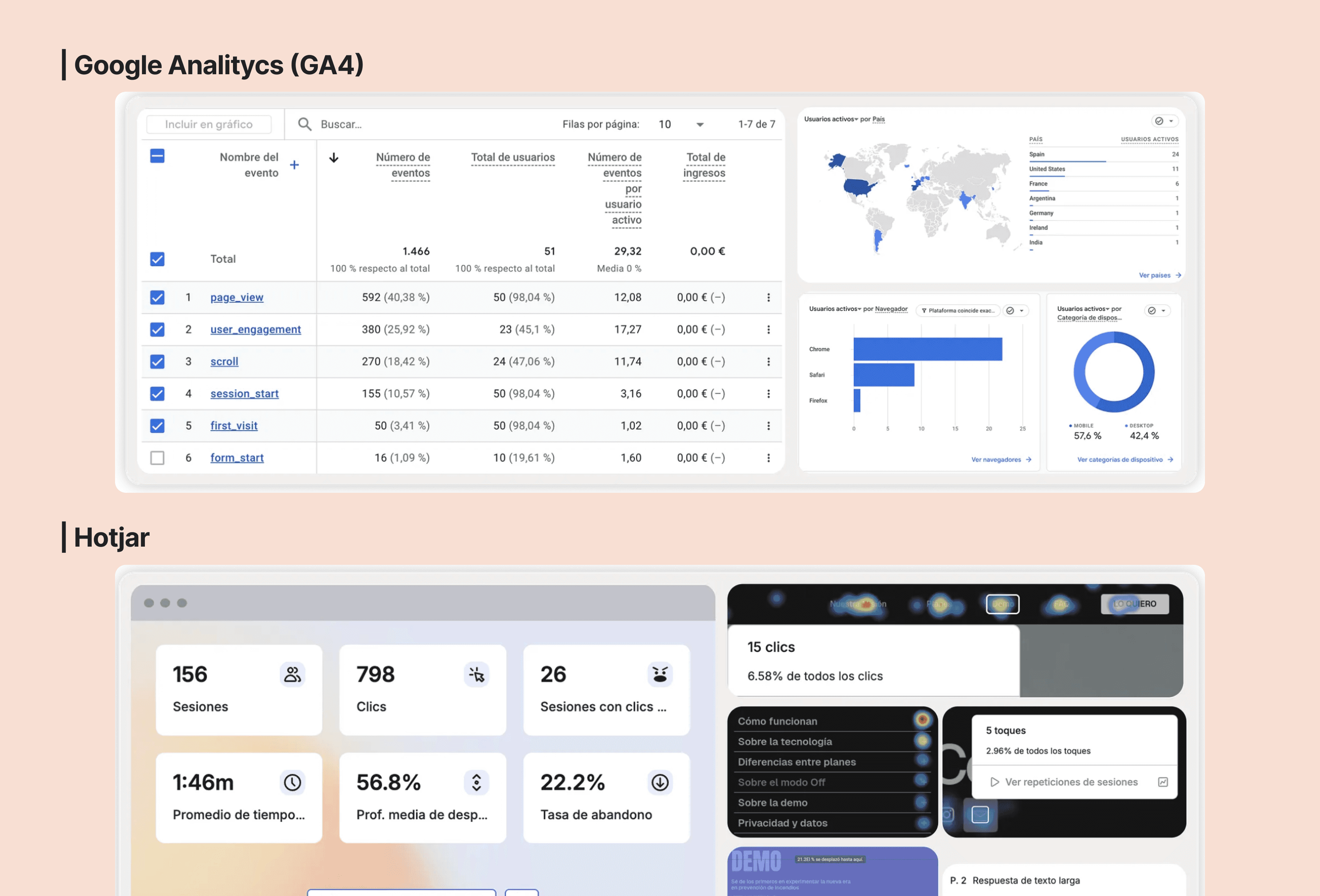
The landing was published without paid campaigns to observe organic interest and comprehension, using GA4 and Hotjar to track engagement and behavior. Early signals show strong exploration and scroll depth, with mobile as the primary device. While form completion was low, indicating friction or technical issues, it is still early to draw final conclusions. Ongoing monitoring and iteration will help validate trends and guide next improvements.
Next Steps
The upcoming phase focuses on bringing Etna closer to real users, testing the concept with field teams, gathering qualitative insights and refining the product based on operational realities.
Learnings
This project reinforced that Lean is not just a methodology, but a mindset, build with what you have, measure early, listen carefully and adjust with intention. In two weeks, I turned uncertainty into actionable insights, avoided over investing in unvalidated ideas and proved that momentum comes from learning, not polishing. The key takeaway: you don’t need to have everything solved to start, but you do need data to move forward with confidence.